

Every year, hundreds of thousands of international patients fly to Turkey for a hair transplant — more than for any other destination on earth. There are specific reasons that happened, and they matter more than the reputation alone: a particular combination of surgical volume, cost, and infrastructure that developed in Istanbul over the space of a decade and hasn't really been matched anywhere else. Hair Transplant Turkey refers to that whole phenomenon — travelling to Turkey, almost always Istanbul, for hair restoration surgery, typically FUE or DHI, at a fraction of what the same procedure costs in the UK, US, or Western Europe. This guide exists to explain the complete picture behind that scale — what the procedure actually involves, why Turkey works the way it does, how to tell a good clinic from a bad one, and what recovery and results really look like — so you can make an informed decision rather than a rushed one.

I'm Jonathan, and I'm the person behind this guide. In January 2025, after seven years of putting it off, I flew to Istanbul and had an FUE hair transplant with 3,800 grafts at Clinicana. I documented every stage of it — the research, the doubts, the six-hour procedure, the rough patch a few months later when my hair actually fell out, and the point when it grew back in — specifically so this site could be built on something that actually happened, not just research. I paid €2,850 (about £2,400) of my own money, with no discount and no sponsorship; the referral relationship I now have with that clinic came afterwards, and it's disclosed properly further down this page.
For most people with stable hair loss and a properly vetted clinic, yes.
Yes, provided you choose a licensed, hospital-based clinic with a properly trained team — whether the surgeon performs the procedure personally or oversees a skilled technician team, both models can produce excellent results, as mine did.
Realistically £1,500–£3,500 all-inclusive.
People with stable, predictable hair loss and realistic expectations about a 12–18 month timeline.
Would I recommend rushing into it? No — the clinic matters more than the country, and that deserves real research.
Read on in order and this works through the whole subject, one piece at a time. Skip to whichever part you need and it still stands on its own.
My Hair Transplant Experience in Turkey
Everything below is theory until you actually book a flight, so before I get into the general advice, here's what it was actually like for me — this is the reason the rest of this guide exists in the first place.
Seven years of delay came down to two fears, both unfounded — choosing the wrong clinic and becoming a horror story, and worrying how people close to me would react. Underneath both of those was something simpler: I'd just stopped feeling like myself in photos, and I was tired of it being the first thing I noticed in every mirror. If you're stuck overthinking the way I was, give yourself a real deadline rather than letting it run indefinitely.
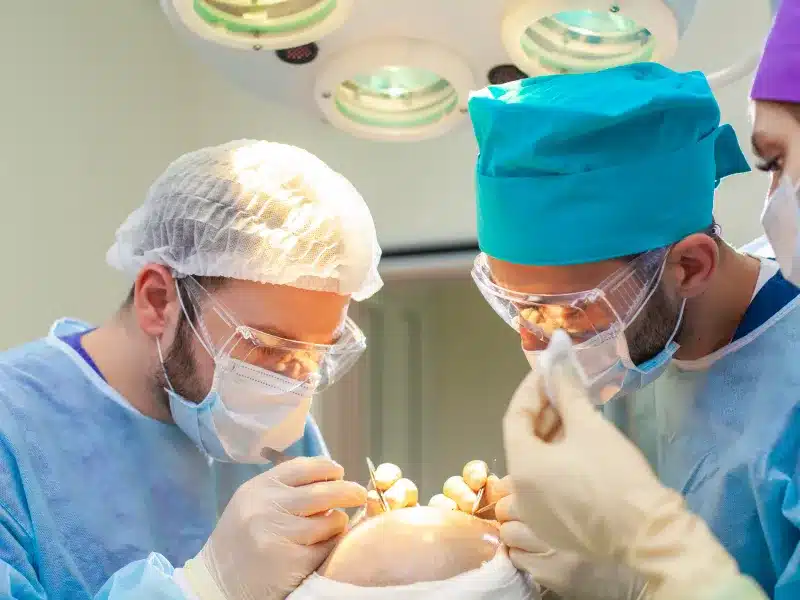
Booking happened in December 2024, on the strength of a provisional, honestly-caveated graft estimate — 3,800, pending an in-person exam. Travel day followed the pattern this whole industry is built around: a driver meeting me at Istanbul Airport, a short transfer to a hotel just 150 metres from the hospital, and pre-op bloodwork before I'd even properly unpacked. Procedure day was six hours: an anaesthetic injection that stung briefly like a bee sting, then nothing, while a technician team extracted and implanted those grafts one at a time, my surgeon checking in throughout to oversee the hairline he'd designed. The anxiety beforehand was, for me, considerably worse than the procedure itself.
Recovery is where theory meets reality hardest. The shedding phase, around month three, is the part nobody prepares you for properly — the transplanted hair falls out, and for a few weeks your head can look thinner than before you'd had anything done at all. By months six and seven, results were natural enough that friends who didn't know about the procedure just assumed I'd changed products — and that was the first time in years I stopped thinking about my hairline in every photo.
My only real regret is not doing any of this seven years sooner. That said, my experience is just one data point — everyone's donor supply, budget, and recovery timeline look slightly different, and the sections below cover the parts I glossed over here in proper detail.
Everything in this section, with real photos and the parts I didn't post about at the time, is exactly what the free ebook covers in full.
Read my full story in the free ebook →What Does Getting a Hair Transplant in Turkey Actually Involve?
Before working through any single decision, it helps to see the whole shape of it. A hair transplant in Turkey isn't just a surgery — it's a short, structured journey that Istanbul's medical tourism industry has built specifically around international patients, and most of it follows a predictable sequence.

It typically starts with research and an initial consultation, usually conducted remotely over photos, followed by a quote and, once you're satisfied with a clinic, a booking. From there it becomes a physical trip: flying into Istanbul, an airport pickup arranged in advance, a short stay at a partner hotel close to the clinic, and pre-operative blood tests to confirm you're fit for surgery. Surgery day itself follows, usually a single long day under local anaesthetic. Recovery then unfolds in stages over the following weeks and months, supported by aftercare instructions, local pharmacies for any medication, and — once you're home — ongoing support over WhatsApp rather than in person. Long-term results continue developing for a year or more after you've flown home.
In short: research, candidacy, budget, clinic, technique, booking, travel and procedure, recovery, then results. Each stage below builds on the one before it, and there's a dedicated guide for most of them if you want to go deeper on any single part.
Why Is Turkey So Popular for Hair Transplants?
This is worth getting straight before anything else, because it explains a lot of what follows. Turkey didn't slowly build a reputation for hair transplants over decades — it happened quite fast, and for fairly specific reasons. As a small number of Istanbul clinics built genuine surgical expertise through sheer procedure volume, word spread through patient forums and before-and-after photos faster than through any formal marketing. Medical tourism agencies then accelerated that growth further, packaging surgery with flights, hotels, and transfers into a single product that was easy for an international patient to say yes to. Hundreds of thousands of patients now travel to Turkey every year for this procedure alone, and that scale is precisely what allowed clinics to build the all-inclusive, English-speaking, WhatsApp-supported systems that define the experience today.

High patient volume creates unusually experienced surgeons and technician teams: some Istanbul clinics perform many thousands of procedures a year against 100–200 for a typical UK or US clinic. That same volume, spread across hundreds of competing clinics, forces prices down, because no single provider can charge Western rates when a dozen others nearby are doing comparable work for less. And because so many patients are travelling internationally, an entire supporting ecosystem has grown up around them — English-speaking coordinators, translators, pre-arranged airport transfers, partner hotels, and WhatsApp-based communication that works across time zones long after you've flown home.


How is hair transplant treatment regulated in Turkey? "Cheap, high-volume Istanbul clinic" can make this whole industry sound like a bit of a free-for-all, so it's probably worth saying plainly that it isn't — there's a real regulatory chain behind it, not just a supply chain for cheap surgery. The Ministry of Health licenses clinics operating in Turkey, and some of the hospitals used for hair transplants also carry JCI and ISO 9001 accreditation on top of that licensing. What that licensing actually tells you is narrower than it sounds, though. It confirms a facility is legally permitted to operate — it doesn't tell you whether a specific surgical team is any good at hairline design or graft handling. Accreditation is a floor, not a guarantee, and the same competitive market that produces genuinely excellent clinics also produces "hair mills" that compete on price by cutting corners instead of getting more efficient. I'd verify a clinic's current licensing and accreditation claims directly before booking anywhere rather than taking a website's word for it, and treat that as the starting point for your research rather than the finish line. Regulation tells you a provider is allowed to operate. It's the clinic itself that determines your actual result, which is the next question.
I saw this infrastructure first-hand on the day I landed: a driver was waiting at Istanbul Airport with a name sign, took me for pre-op bloodwork, then to a hotel booked as part of the package, just 150 metres from the hospital where I'd have surgery the next day. A small deposit had secured the booking in advance; the rest was settled at the clinic. Honestly, I'd spent more time worrying about the surgery than the logistics — and it turned out to be the logistics that had clearly had the most thought put into them.
My own experienceWith the reputation, the infrastructure, and the regulatory picture all in view, the next real decision — the one everything else depends on — is whether a hair transplant in Turkey is actually right for you specifically.
Is a Hair Transplant in Turkey Right for You?
People tend to ask this all in one go, but it's really a handful of separate questions that need answering in order. Are you actually a good candidate? Because no clinic, however brilliant, can produce a good result on the wrong candidate. Is the price you're being quoted genuine, or is half of it going to show up later as an "extra"? And does any of Turkey's reputation even matter to you once those two are sorted? I got stuck on this for a while myself, trying to answer all of it at once. Turkey's volume and cost advantages are real, but none of that mattered to me until I'd separately confirmed I was a good candidate and found a clinic I actually trusted, rather than one that just sounded confident.
Most people aren't researching hair transplants out of idle curiosity, and it's worth being honest about that. Usually it's something more personal — avoiding photos, feeling older than you are, or just being tired of noticing it in the mirror. That's a perfectly good reason to be here, and it's exactly why it's worth taking the time to get this decision right rather than rushing it.
Candidacy is where that decision actually gets made, and it gets decided before you've spoken to a single surgeon. A hair transplant works by moving your own follicles from a donor area — usually the back and sides, which are genetically resistant to balding — into the thinning or bald recipient area. Everything else flows from how much donor hair you actually have: it sets a ceiling on how much recipient area you can realistically cover, which shapes your graft count, and your graft count is what most of your cost — and, honestly, which clinics can even do the job properly — comes back to.

Where your hair loss sits on the Norwood scale affects how stable your donor supply is likely to remain. Diffuse thinning changes the calculation further, since there may not be a clearly defined donor zone in the way there is with typical male-pattern loss — part of why the approach differs for many women, too. Age matters similarly: hair loss still actively progressing in someone under 25 can undo a transplant's coverage within a few years, wasting donor hair that doesn't grow back. Candidacy is usually assessed remotely at first, through photos sent to a coordinator, before anything is confirmed in person.
When I went through this myself, the honesty of that remote assessment was what built my confidence — Clinicana's coordinator gave me a provisional graft estimate of 3,800, explicitly flagged as provisional until an in-person exam, rather than a fixed promise designed to get me to book. A clinic trying to sell me something would have just told me what I wanted to hear.
My own experienceThe ebook includes the same self-assessment checklist I actually used before contacting any clinic, if you'd rather work through it in one place.
If you are a suitable candidate, the natural next question is what this actually costs once you know what you need — and every quote you get will seem either suspiciously cheap or unnecessarily expensive until you understand that.
How Much Does a Hair Transplant in Turkey Cost?
The biggest pricing mistake isn't choosing an expensive clinic. It's misunderstanding what you're actually comparing.
Price in this industry is set by a chain of factors that push the number up or down: graft count determines how many hours of surgical time you need, technique determines how much of that time is skilled labour versus semi-automated process, and who performs the procedure — surgeon throughout, or a trained technician team under a surgeon's design and supervision — determines a large part of the labour cost itself. Package inclusions matter just as much — a headline price that excludes accommodation, transfers, or aftercare isn't really comparable to one that includes them, even if the surgery itself is identical. Payment structure varies too: most clinics take a modest deposit to secure your date, with the balance settled in person once you arrive.

That's why two clinics can quote €2,000 and €4,000 for what looks like the same procedure on paper. One of them has usually reduced planning quality or cut aftercare, or pushed costs into "optional extras" you only discover once you've already committed — or, just as often, one is simply charging a premium for the surgeon to perform every graft personally rather than oversee a technician team doing the same work to a high standard. A suspiciously low price deserves exactly the same scrutiny as a suspiciously high one.
There's a quiet anxiety that comes with this stage — it's easy to feel like every number is a trap, whichever direction it points. That's certainly what it felt like when I was comparing quotes myself —
Performed by a technician team under my surgeon's design and supervision.
- Surgery and consultation
- Four nights at a 4-star hotel
- All transfers
- Medication
- A year of aftercare support
Flights and evening meals were the only real additions, bringing my honest total to roughly £2,855 — still around 64% less than the cheapest comparable UK quote I'd found.
Once you know your realistic budget, the next question stops being about the price tag entirely — it becomes whether a specific clinic can actually deliver good work for that money, which is a question about trust rather than cost. Work out your own number before you request a single quote — the ebook includes the same budgeting worksheet I used before I contacted any clinic.
How Do You Choose a Hair Transplant Clinic in Turkey?
The country isn't the decision. The specific medical provider is — and this is where most people either get this whole process right, or get it badly wrong.
What I would check before booking anywhere:
- Who assesses you, and how thoroughly?
- Who designs your hairline?
- Who performs the extraction, and who performs the implantation?
- How closely is the surgeon involved in planning and oversight?
- Where is the procedure actually performed?
- How is your graft count determined, and is it fixed or provisional?
- What does the quoted package actually include?
- What aftercare is provided, and for how long?
- What happens if something goes wrong once you're home?
- Can you verify genuine, verifiable patient results?
- How many patients does the clinic treat in a single day?
Working through those questions with a clinic tells you far more than a review score or a before-and-after gallery on its own — and it's exactly what separates a trustworthy provider from one hiding behind Turkey's reputation.
The part that confuses people most is the surgeon-versus-technician question, and the honest answer is that both models are legitimate. A surgeon who performs every single extraction and implantation personally is a real option, and it typically costs considerably more, because it caps how many patients that surgeon can treat in a week. A well-trained technician team performing the extraction and implantation, under a surgeon who designs the hairline, plans the procedure, and oversees the team, is the model most high-volume Istanbul clinics actually use — and at a genuinely good clinic, it produces excellent results. I almost made the mistake of assuming technician involvement was automatically a red flag, before realising the real question isn't who holds the tool, it's how experienced and well-supervised that team actually is.

Hair mills sit downstream of poor supervision, not technician involvement itself — a clinic booking far more patients per day than its team can properly attend to is the real problem, regardless of who's holding the tool that day. And consultation quality is the tell that runs through all of it: a clinic that gives you a provisional, honestly-caveated assessment is signalling the same care that should carry into the surgery itself.
I saw this play out directly during my own research: one question ruled out almost half the clinics I contacted, and it's a simple one that almost nobody asks directly. I asked exactly who would perform my procedure, how experienced that team was, and how closely the surgeon would be involved in planning and oversight. My own procedure was carried out by Clinicana's technician team, with my surgeon handling the consultation, hairline design, and oversight — and I was genuinely happy with the result. A clinic's willingness to answer that question plainly, rather than dodge it, told me more than any review score could.
My own experienceIf you couldn't confidently reject a bad clinic tomorrow based on a WhatsApp reply alone, that's the gap worth closing before you book anything. The ebook's clinic comparison worksheet walks through this same checklist question by question, side by side.
Once you can recognise a trustworthy clinic, the technique it recommends should follow from your own hair loss pattern and graft count — never the other way around, which is the next thing worth understanding before you commit to anything.
Which Hair Transplant Technique Is Right for You?
Technique choice should follow from your hair loss pattern and graft count, not the other way around — a good surgeon recommends based on what you actually need, not whichever procedure carries the better margin.
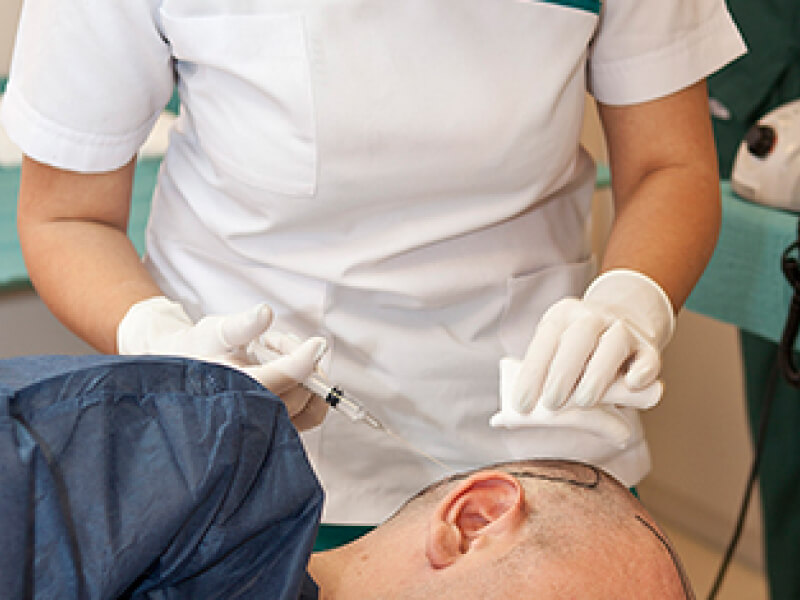
FUE suits larger graft counts because it scales efficiently and keeps cost manageable at volume. DHI suits smaller, precision-focused areas, and specifically cases where avoiding a full head shave matters, which is part of why it comes up so often in discussions of female hair transplants. Sapphire FUE sits between the two as a modest refinement of standard FUE — a small premium for marginally cleaner incisions and faster healing. None of the three fixes a bad hairline design or compensates for a rushed consultation; surgeon planning and technician skill explain far more of a natural-looking result than the specific tool used to create the channel.
My own surgeon actually talked me out of the more expensive option — recommending standard FUE for my 3,800 grafts instead of pushing me toward DHI or a Sapphire upgrade, and telling me plainly that the blade mattered far less than the team's experience. I'd gone in half-expecting an upsell, so that alone told me he was planning around my results, not his margin.
My own experienceWhat Happens When You Travel to Turkey for Your Procedure?
Once candidacy, budget, clinic, and technique all check out, the only thing left standing between research and surgery is logistics — and, for most people, a lingering nervousness that has nothing to do with logistics at all and everything to do with finally committing to something they've thought about for a long time.
Practically, that means knowing what to pack, understanding how long you'll actually need to stay — most packages are built around a 3–4 night trip covering surgery day and initial recovery — and getting a feel for Istanbul as a city before you land. A deposit typically secures your booking in advance, with the remainder settled at the clinic once you arrive. All of that matters, but only once the decisions that actually determine your result are already settled.
If you're not confident on one of the earlier questions — candidacy, budget, or clinic — it's worth going back to that before locking in travel dates.
What Is Hair Transplant Recovery Like?
Recovery is a chain, and each stage sets up the next. The first two weeks — mild soreness, scabs falling away with gentle washing — determine how well the grafts settle in place. That settling period leads into the shedding phase around months two to three, where the transplanted hair falls out before the real growth begins. It's caused by the trauma of transplantation, not by anything going wrong, and it resolves on its own as the follicles re-enter their growth cycle. From month four, new growth appears, and density builds steadily through month twelve before reaching full maturity somewhere between twelve and eighteen months.

Week 6

Week 12

Week 16
Most of this happens after you've flown home, which is why aftercare is designed around remote support — a written plan, WhatsApp access to your clinic, and, if you need anything locally, a Turkish pharmacy (eczane) will usually have already dispensed what you need before you left the country.
This was exactly my own experience with the shedding phase — the part nobody warned me about was less the physical side and more how it felt psychologically, precisely because I hadn't understood it as an expected stage rather than a bad sign. The clinic's WhatsApp support during that stretch mattered more to me than any information I'd read beforehand. The ebook includes a printable recovery timeline that lays out exactly which week is which.
My own experienceWhat Results Can You Expect?
Your final result comes back to the same things this guide started with. Your donor supply set your graft count, your graft count and the surgical planning around it shaped your hairline and density, and how carefully you stuck to aftercare afterwards decides how well those grafts actually took. If I had to pick the single biggest factor in whether a result looks natural or "obviously done," it's hairline design — more than the technique used, and more than whether a surgeon or a technician team did the extraction.
Some patients also add finasteride, minoxidil, or PRP alongside the transplant, generally to slow further natural loss in areas that weren't transplanted rather than to improve the transplanted area itself — worth discussing with your surgeon rather than assuming any of them are mandatory. Whether a second procedure is ever needed later is a planning question, not a sign the first one failed, and it depends on the same donor-supply relationship this guide started with.
Understanding what a good result looks like is only half the picture, though — it's just as important to understand honestly what can go wrong, and why.
What Can Go Wrong?
Every risk in this industry traces back to a handful of causes rather than random bad luck. Overharvesting happens when a clinic takes more grafts than the donor area can safely supply — a planning failure, not a surgical accident, and exactly what a proper consultation is meant to prevent. Poor or unnatural results usually trace back to inexperienced hairline design or poorly supervised technician teams rather than to technician involvement itself. Genuine medical complications are uncommon at properly accredited clinics, but they're not zero anywhere in the world, and it's better to know that going in than find it out afterwards. "Hair mill" clinics tend to carry a version of all of these risks at once, since the same volume-over-care model runs through the overharvesting, the rushed planning, and the lack of surgeon oversight.

I saw this fear reflected in my own decision-making before I booked: my biggest worry wasn't who would be holding the tool, it was overharvesting — the idea of a clinic taking more than my donor area could safely give up. That fear is exactly why I pushed for a provisional, not fixed, graft number before agreeing to anything, and why I made sure my surgeon, not just the technician team, was directly involved in planning my hairline.
My own experienceIf something does go wrong, resolving it from abroad is genuinely harder than with a surgeon down the road from home — one more reason clinic selection deserves more of your attention than the destination country does.
My Hair Transplant Results

My own before and after, 3,800 grafts
By month six or seven, my own density had reached a point where friends who didn't know about the procedure just assumed I'd changed products — the outcome every earlier decision on this page had been building toward. What actually mattered to me, more than the density numbers, was something harder to quantify: I stopped angling my head in photos without thinking about it.
My own experienceWith the risks out in the open and my own outcome laid out above, most of what's left are shorter, more specific questions people tend to ask once they've got this far.
Hair Transplant Turkey FAQs
How much does a hair transplant in Turkey cost?
Typically £1,500–£3,500 all-inclusive. I paid €2,850 (~£2,400) for 3,800 grafts.
Is it safe?
Yes, at licensed, hospital-based clinics with a properly trained, well-supervised team — verify Ministry of Health licensing directly.
Should the surgeon perform the whole procedure personally?
Not necessarily. A well-trained technician team working under a surgeon's design and supervision is standard at good clinics and can produce excellent results; surgeon-performed-throughout typically costs more but isn't automatically "better."
How many grafts will I need?
Usually 2,500–4,500, calculated from your donor supply. Mine was 3,800.
FUE or DHI?
Neither is universally better — it depends on graft count and area size.
How long do I need to stay in Turkey?
Most packages are built around a 3–4 night stay, covering surgery day and initial recovery before flying home.
Can women get hair transplants in Turkey?
Yes, though planning differs for diffuse thinning.
For everything else, see the full FAQ page — the ebook covers the questions that don't have short answers.
Two more places to start
If safety is what worries you most, start with is a hair transplant in Turkey safe?, which sets out what I checked before I booked.
If you are already past the procedure, the recovery timeline takes you from the first days to a full year.
Where to Go Next
You now understand why Turkey became the world's leading destination for this procedure, how the whole process actually unfolds, how to tell a trustworthy clinic from a hair mill, and what recovery and results genuinely look like once the research turns into real life. None of that came down to Turkey itself being the deciding factor — it never really is. It comes down to making an informed decision at every single stage along the way: candidacy, budget, clinic, technique, and what you do with the months of recovery in between.
Everywhere else on this site expands one piece of that picture in full depth.
If you'd rather hear it from someone who's actually been through it, my Clinicana review and the wider collection of real patient experiences are the best place to go.
I put this site together because I wish something like it had existed when I was the one lying awake wondering whether to book. The free ebook is the practical companion to everything above — the checklist, the worksheet, the questions, and the timeline, all in one place, ready for whichever stage you're at right now.
If you're reading reviews of Turkish clinics, hair transplant Turkey reviews sets out what patients report on Trustpilot and Reddit and how to read it.
 Continue with Google