

I’ll be honest with you—most clinics won’t tell you this, but the timeline they quote and what you actually need are two different things. You’re probably wondering if you can squeeze in a procedure and fly back within days. Here’s what I’ve discovered after researching countless cases: the answer might surprise you, and it could change how you plan your entire trip.
The Minimum Stay: What You Actually Need
Most people underestimate how long they’ll need to stay in Turkey after a hair transplant, and it costs them later—either in rushed recovery or unexpected return visits.
The minimum required duration is typically 7–10 days. This covers your procedure day, immediate post-op care, initial scabbing resolution, and a follow-up scalp wash. Many clinics market shorter stays to attract international patients, but that’s misleading.
I stayed 10 days during my January 2025 transplant at Clinicana. That timeframe allowed proper wound management, professional aftercare guidance, and peace of mind before flying home. Leaving earlier meant risking infection or mishandling early recovery.
Budget realistically: procedure day plus one week minimum. Anything less invites complications you’ll manage alone internationally.
Why Some Clinics Quote Different Timelines
When I was researching clinics, I noticed they quoted me stay lengths ranging from four days to two weeks—for the same procedure. That gap isn’t accidental; it reflects how clinics structure their packages, what they include in “aftercare,” and how aggressively they market their turnaround times.
Understanding what’s actually driving these differences will help you separate medical necessity from sales positioning.
Marketing vs. Medical Reality
If you’ve been researching Turkish hair transplant clinics, you’ve probably noticed something frustrating: one clinic tells you you’ll see results in 3 months, another says 6 months, and a third won’t commit to a timeline at all.
Here’s what’s happening: aggressive marketing campaigns often compress timelines to meet patient expectations and win bookings. A clinic promising visible results by month three isn’t necessarily lying—some people do see early growth then—but they’re presenting the best-case scenario as standard.
Medical reality is messier. Hair transplants follow a biological process that doesn’t speed up regardless of clinic reputation or technique. What changes isn’t the timeline; it’s how honestly clinics present it. The most trustworthy ones acknowledge variability and manage expectations upfront rather than dangle unrealistic promises.
All-Inclusive Packages Hide Variables
You’ve probably noticed that Turkish clinics package their services differently—one includes accommodation and airport transfers, another doesn’t; one quotes a single all-in price, another itemizes costs by grafts.
This matters because it distorts timeline comparisons. Here’s what actually varies:
- Clinic pricing models — Some bundle pre-op tests, consultations, and aftercare into one fee; others charge separately, making total stay unclear.
- Surgical techniques — FUE takes longer than DHI, affecting procedure day length and recovery schedules differently.
- Accommodation proximity — Hotels near the clinic reduce travel time between appointments, compressing your actual stay versus quoted timelines.
The “5-day package” might mean 5 clinical days plus hidden logistics. When comparing clinics, ask what’s genuinely included, not just the headline cost.
Aftercare Models Drive Duration
Because clinics define aftercare differently—some offer remote check-ins for months, others only cover the first week—the total timeline they quote can vary dramatically, even for the same procedure.
| Aftercare Model | On-Site Duration | Post-Return Support | Regional Variations |
|---|---|---|---|
| Minimal | 3–5 days | None | Common in budget clinics |
| Standard | 7–10 days | 4–8 weeks remote | Most mid-range clinics |
| Extended | 10–14 days | 3–6 months remote | Premium hospital-based |
| Luxury | 14+ days | 12 months included | High-end providers |
| Remote-Only | 1–2 days | 6 months structured | Emerging model |
When a clinic quotes extended stays, they’re often bundling post-op scalp washes, multiple check-ups, and ongoing guidance. I experienced structured aftercare that continued after I returned home—this model reduces uncertainty but doesn’t necessarily require you to remain in Turkey longer.
The First 48 Hours: Procedure and Initial Recovery
I’ll walk you through what actually happens in the operating theatre and how you manage those critical first two days when your scalp’s healing begins. You need to understand both the procedure itself and the practical comfort measures that make a real difference—because this is where many people feel most anxious, and mostly unnecessarily.
Let me break down what to expect and what you can actually control.
What Happens During Surgery
Most patients arrive at the clinic early in the morning, often anxious about what’s to come. I remember feeling that same nervousness, but the medical team’s calm professionalism settled my nerves quickly.
- Anesthesia procedure — Local anesthesia is administered to numb the donor and recipient areas, ensuring you feel pressure but no pain throughout the 6–8 hour surgery.
- Pain management strategies — You’re given breaks, food, water, and can communicate any discomfort to the surgical team immediately.
- The extraction and implantation — Grafts are harvested using FUE or FUT methods, then meticulously placed into recipient sites.
You remain awake and aware, though sedation options are available. The environment stays clinical yet surprisingly calm. Most patients report the experience being far less traumatic than anticipated.
Managing Post-Op Comfort Safely
The first 48 hours after your hair transplant are critical—not because something’s likely to go wrong, but because how you manage comfort and follow post-op protocols directly influences healing and graft survival. Your clinic will provide detailed post-operative caring instructions covering medication schedules, sleep positioning, and activity restrictions.
Scalp swelling management matters most during this window. I kept my head elevated on multiple pillows, took prescribed anti-inflammatories on schedule, and avoided touching the transplanted area entirely. Most clinics supply specialized pillows or positioning guidance.
Pain is typically minimal—manageable with over-the-counter analgesics—but discomfort from swelling peaks around day two. You’ll receive checkup appointments during this period. Strict adherence to these early protocols sets the foundation for ideal results.
Days 3–7: When You Can Leave (And When You Shouldn’t)
By day three, you’ll likely feel well enough to move around your hotel or apartment, and that physical capability can create a dangerous illusion—that you’re ready to resume normal life.
You’re not. Minimizing downtime doesn’t mean ignoring recovery requirements. Managing expectations means understanding the difference between feeling okay and being healed.
Days 3–7 carry real risks:
- Bumping your scalp during normal movement can dislodge grafts
- Excessive sweating from activity increases infection risk
- Flying or traveling exposes you to pressure changes and circulation stress
I stayed local through day 5, kept my head elevated, and avoided anything resembling exertion. That restraint mattered more than I expected. Leaving early feels tempting. It’s a mistake most people regret quietly.
Deciding Between Quick Turnaround and Extended Recovery
Many people approach their hair transplant recovery with a calculation already made: they’ve booked time off work, arranged their schedule, and mentally committed to a specific number of days away.
The tension here is real. You can technically leave after day 3—but “can” and “should” aren’t the same thing.
| Factor | Quick Turnaround (3–5 days) | Extended Stay (7–10 days) |
|---|---|---|
| Visible scabbing | Moderate to heavy | Mostly resolved |
| Work readiness | Requires explanation | Easier to conceal |
| Emotional toll | Higher anxiety | Lower stress |
| Financial considerations | Lower accommodation costs | Higher but decreased complications |
| Confidence level | Lower | Considerably higher |
The emotional toll of returning visibly scabbed often outweighs savings. I’ve seen people regret rushing home. Extended recovery isn’t luxury—it’s strategic. Your decision hinges on workplace culture, comfort with visibility, and how much peace of mind matters to you.
Return to Work and Normal Activities: The Real Timeline
Once you’ve made peace with your recovery timeline, the next question becomes practical: when can you actually function again?
Most people return to desk work within 3–5 days, though post-transplant swelling makes you look noticeably uncomfortable during week one. Physical jobs requiring sweating or heavy lifting need to wait 2–3 weeks minimum.
Here’s what matters:
- Days 1–3: Rest at your hotel. Don’t rush back to meetings or flights.
- Week 1–2: Light activity only. Post-transplant swelling peaks around day 3–5.
- Week 3+: Most normal activities resume, but pre-travel precautions still apply if flying.
I returned to remote work by day four, but honestly, I’d have benefited from staying quiet longer. Your body’s healing—respect that timeline, even when you feel ready.
Travel Logistics Before and After Surgery
If you’re flying to Turkey from abroad, your travel planning doesn’t end when you book your clinic appointment—it actually becomes more critical.
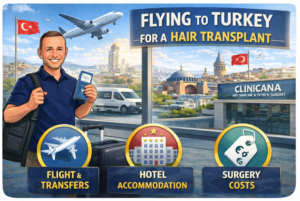
Most reputable clinics include airport transfers and temporary accommodation in their packages. This matters more than it sounds. You’ll be groggy post-op, sensitive to movement, and unable to navigate Istanbul alone. A dedicated driver eliminates stress and guarantees you reach your hotel safely.
Choose accommodation within walking distance of your clinic. I stayed 200 metres away, which meant minimal travel during recovery. This proximity reduces infection risk and makes post-op checkups effortless.
Arrange your return flight conservatively—at least seven days after surgery. You’ll still have scabbing and swelling. Flying too early increases complications and secures your ability to rest properly.
Planning Your Trip Around Aftercare Checkups
Your clinic’s aftercare schedule should shape your travel dates, not the other way around.
Most clinics require specific post op travel arrangements, including checkups at:
- Day 1–2 (post-op wash and initial assessment)
- Week 1–2 (scab monitoring and healing review)
- Month 3 (shedding phase evaluation)
When finding accommodations, stay close to your clinic during the first 7–10 days. I stayed 200 metres away, which eliminated stress during recovery. Beyond week two, you can travel within Turkey if your clinic approves remote aftercare.
Some clinics offer only in-person checkups; others support video consultations after initial visits. Confirm this before booking flights home. A premature departure risks missing critical healing assessments and leaves you without professional guidance when questions arise.
Align your calendar to aftercare, not convenience.
Building Your Own Timeline: A Personalized Framework
Because every person’s healing, work commitments, and life circumstances differ, there’s no single timeline that works for everyone. I’d recommend working backward from your return date.
Start by identifying how many days post-op you’ll be away, then factor in your clinic’s mandatory checkup schedule. If you’re managing flight schedules, book your return flight for at least day 5–7 post-op—early enough to avoid extended time away, late enough that you’re past the most visible swelling.
Build buffer days into your itinerary rather than timing local sightseeing immediately after surgery. Use those extra days for rest, scalp care, and attending any final checkups. This approach gives you flexibility while respecting your body’s recovery needs.
Frequently Asked Questions
Can I Fly Home the Day After My Hair Transplant Procedure?
Technically you can, but I’d strongly advise against it. You’ll want to postpone your return flight and avoid immediate travel for at least 3-5 days. Your scalp needs rest, monitoring, and professional aftercare you can’t replicate mid-flight.
What Happens if I Miss a Scheduled Post-Op Checkup While Back Home?
Most clinics manage missed follow-up appointments remotely through WhatsApp or video calls. You’ll still need to stay consistent with medication adherence and scalp care instructions. Contact your clinic immediately—they’re experienced handling patients across different time zones.
Should I Take Time off Work Before Traveling to Turkey for Surgery?
Yes, you should plan enough leave before traveling. I’d coordinate with your employer for at least one week off—covering your travel days, the procedure, and initial recovery when you’re not presentable for work yet.
How Do Time Zone Changes Affect Healing During the Flight Home?
Jet lag disruptions won’t damage your healing—your body’s biological clock resets gradually, not instantly. Time zone adjustments might disrupt your sleep temporarily, which can slow inflammation recovery slightly, but they won’t compromise your transplant’s success.
Can I Extend My Trip to Turkey Without Affecting My Surgical Recovery Outcomes?
Yes, you can extend your trip without compromising healing. I stayed longer to explore Istanbul’s cultural experiences and tourism options—it actually reduced stress, which supports recovery. Just follow your clinic’s aftercare guidelines regardless of how long you’re there.
Conclusion
You’ll need at least 7-10 days in Turkey to protect your investment properly. While you might feel tempted to leave earlier, rushing your recovery risks infection and graft failure. Work with your clinic to plan realistic timelines that account for your specific procedure and healing needs. Don’t let marketing hype push you into a shorter stay—your results depend on giving yourself adequate recovery time.
 Continue with Google