

I’ve encountered countless patients who’ve returned from Turkey with disappointing transplant results—and they’re all asking the same question: can this be fixed? The honest answer isn’t simple. While revision surgery can address certain problems like patchy density or poorly designed hairlines, success hinges on what went wrong initially and who you trust to correct it. Let me walk you through what’s actually possible.
What Counts as a Failed Hair Transplant?
Before you can decide whether a transplant can be fixed, you need to understand what “failed” actually means—because it’s not always clear-cut.
A truly failed transplant involves poor graft survival—where transplanted hair doesn’t take root or grows minimally. This stems from either causes of poor graft survival (donor damage, dehydration, extended graft time) or technical errors during surgery (incorrect depth, angle, or tension).
But not everything that looks wrong is actually a failure. Temporary shedding in months one through three is normal. Uneven density or hairline design issues are different problems—fixable, but distinct from graft failure.
Some results disappoint because expectations were unrealistic, not because the procedure failed medically. That distinction matters enormously when planning a correction strategy.
Why Turkish Clinics Aren’t Uniquely Responsible for Poor Outcomes
When you’re researching a failed transplant, it’s easy to blame Turkey—but poor outcomes happen in every country, at clinics charging $15,000 and $3,000 alike.
What actually matters is understanding the gap between what patients expect and what hair transplants can realistically deliver, which isn’t a Turkish problem but a universal one. The difference is that Turkey’s transparency around pricing sometimes exposes this gap more clearly than clinics elsewhere that charge premium prices and still produce mediocre results.
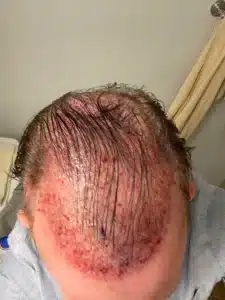
Poor Outcomes Happen Everywhere
One of the most persistent narratives around Turkish hair transplants is that poor outcomes are somehow endemic to the country—a problem you’d sidestep by choosing a surgeon in London, New York, or Sydney.
That’s not supported by evidence. Transplantation complications occur in clinics worldwide. Poor graft survival, unnatural angles, improving hairline density issues, and visible scarring happen regardless of geography.
The difference isn’t Turkey versus elsewhere—it’s surgeon skill, clinic standards, and patient selection.
What Turkey offers is transparency through volume and price. You see more reviews, more outcomes, more pricing data. Clinics elsewhere operate the same way; you just see less of it. A bad result in Istanbul is visible. A bad result in Manhattan is quietly managed and rarely discussed publicly.
The real variable isn’t location. It’s the clinic you choose.
The Expectation vs. Reality Gap
Because hair transplantation is a cosmetic procedure, it carries an unusual burden: patients arrive with mental images that don’t always align with what’s medically possible.
You might envision your hairline looking exactly like it did at twenty-five. Your clinic might promise density that biology can’t sustain. Reality often lands somewhere between—and that gap breeds disappointment, regardless of where you have surgery.
Turkish clinics aren’t uniquely responsible for this disconnect. What they are responsible for is managing patient expectations clearly upfront. The best ones do this through honest consultations, before-and-after galleries showing realistic outcomes, and written agreements on what the procedure will actually deliver.
When patient expectations match realistic outcomes from the start, satisfaction follows. When they don’t, even excellent surgery feels like failure.
Can Revision Surgery Actually Fix a Bad Transplant?
Yes, revision surgery can fix a bad transplant—but it’s not a simple undo button, and success depends heavily on what went wrong in the first place.
Common revision scenarios include correcting poor hairline design, addressing unnatural density, and fixing visible scarring. Some issues are straightforward to address; others aren’t.
Managing patient expectations is critical here. If donor hair was depleted or severely damaged, your options narrow.
If the problem was graft placement or density distribution, a skilled surgeon can often improve results. But revision surgery isn’t guaranteed to achieve perfection—it’s about realistic improvement.
The timing matters too. You’ll typically wait 12–18 months post-op before revising, allowing full growth and scarring to settle. This extended timeline frustrates many patients, but rushing creates compounding problems.
How to Diagnose What Went Wrong Before Pursuing a Fix
Before you commit to revision surgery, you need to understand exactly what went wrong—and that diagnosis isn’t always straightforward.
Start by distinguishing between poor outcomes and unrealistic expectations. Was the hairline design incompatible with your face shape? Did the surgeon harvest too many grafts, leaving donor depletion? Are you experiencing shock loss that’s still resolving, or permanent graft failure?
A qualified surgeon will examine your scalp, review your original photos, and assess determining contributing factors—technique, timing, or biological response. Some problems are fixable; others require accepting limitations.
Before weighing revision options, get a second opinion from an independent specialist, ideally someone not invested in booking you immediately. Ask specific questions about graft survival rates, realistic density improvements, and whether additional procedures are truly necessary.
Diagnosis comes first. Decisions follow.
Revision Options: Which Approach Works for Your Specific Problem
Once you’ve identified what actually went wrong, your revision strategy shifts from diagnosis to execution—and that’s where the specifics matter enormously.
If poor density’s your issue, a second transplant targeting the same area can work—but graft survival rates depend heavily on whether your donor site can sustain another extraction. If you’ve experienced donor site scarring, your options narrow: you may need to harvest from alternative areas like body hair, or accept a less dense result.
For unnatural angles or hairline shape problems, FUE revision often outperforms strip-based approaches because it allows precise repositioning without reopening existing scars.
The wrong fix applied to the right diagnosis wastes time and grafts. Match your revision method to your actual problem first.
What to Expect From a Corrective Procedure
Knowing which revision approach fits your problem is half the battle—but understanding what actually happens during and after that procedure is what separates realistic expectations from disappointment.
Corrective procedures follow similar timelines to initial transplants: initial shedding, scabbing resolution within 7–10 days, and gradual regrowth from month four onward. However, revision work often involves denser packing or grafting into scarred tissue, which can increase post op complications like temporary numbness or prolonged swelling.
Long term maintenance matters more with revisions. Your scalp’s healing capacity is already taxed, so aftercare discipline—avoiding tension, protecting grafts, and following clinic guidance—directly impacts success rates.
Realistic timeline: expect 9–12 months for final assessment, not six. Your surgeon should document baseline photos and check-in milestones to track progress objectively.
Choosing a Clinic for Revision Work (The Hard Truth)
Most clinics that marketed heavily during your initial transplant won’t be your best option for fixing it. They’ve no incentive to acknowledge their own work’s limitations.
Instead, look for clinics with demonstrated experience in corrective techniques and revision cases. This matters more than brand recognition. You’ll want surgeons who openly discuss what went wrong and how they’d approach it differently.
Appropriate clinic selection means asking directly: How many revisions have you performed? Can you show before-and-after revision cases? What’s your approach if further grafts are needed?
Hospital-based settings with transparent outcomes tend to be more honest about realistic expectations. They’re accountable to regulatory bodies, not just marketing budgets. That accountability protects you during what’s already a vulnerable second procedure.
Frequently Asked Questions
Will My Revision Surgery Cost Less Than My Original Transplant, or More?
Revision surgery typically costs more than your original transplant because it’s technically demanding. You’ll also face travel expenses again, and insurance won’t cover either procedure since hair transplants are elective. Budget accordingly for the additional investment.
How Long Should I Wait After a Failed Transplant Before Attempting Revision?
I’d recommend waiting 12–18 months to assess your proper regrowth timeline fully. This lets you see final results and evaluate your desired donor density before revision, ensuring you’ve got enough grafts remaining for a second procedure.
Can I Sue a Turkish Clinic if My Transplant Visibly Failed?
You can pursue hair transplant malpractice claims against a Turkish clinic, but Turkish medical negligence lawsuits involve significant barriers: language barriers, jurisdiction issues, and enforcement difficulties across borders. I’d recommend consulting an international medical law attorney first.
Is It Better to Revise With the Same Clinic or Switch?
I’d recommend consulting alternative clinics first. Getting independent assessment from another surgeon protects you—they’ll give honest feedback without bias. You’ll make a stronger decision once you’ve heard what other experts think about your specific situation.
What if Revision Surgery Also Fails—Do I Have Other Options?
If revision surgery fails, you’re not without options. I’d recommend exploring alternative hair loss treatments—minoxidil, finasteride, or low-level laser therapy—while reviewing post-surgery recovery challenges with a dermatologist to understand what went wrong.
Conclusion
You can fix a failed Turkish hair transplant, but it demands honest assessment and careful planning. Don’t assume another surgeon will magically correct poor work—you’ll need someone with genuine revision expertise, not just a big name. Your success depends on understanding what actually went wrong and choosing a clinic that’s fixed similar problems before, not one that’s simply good at initial procedures.
 Continue with Google