

I’ll be direct with you: most clinics hand you a basic instruction sheet at the airport and call their job done. But that’s when your real challenges begin. You’re home now, alone with questions nobody prepared you for, and your surgeon’s suddenly unreachable. What happens next? That’s what we need to talk about.
Why Most Clinics Stop Supporting You at the Airport
Most clinics aren’t set up to support you once you’ve left their building. The reality is simpler than it sounds: you’re their patient during the procedure and immediate recovery, but once you board that flight home, you’re managing your own recovery.
Many clinics operate on a transactional model. They deliver the transplant, give you basic aftercare instructions, then consider their job finished. Time zones, language barriers, and liability concerns make ongoing support difficult. Some clinics genuinely lack the infrastructure for remote monitoring.
This isn’t necessarily negligence—it’s just the structural reality of medical tourism. You need to understand this upfront when managing expectations. Your recovery will depend heavily on your own attention and judgment, not clinic follow-ups.
The First 2 Weeks at Home: When Complications Often Surface
The first two weeks after you leave Turkey are when most post-operative complications emerge—infection, excessive swelling, or unexpected bleeding typically show up during this window, not months later.
You need to know what signs matter, what you can handle at home, and exactly when to contact your clinic rather than panic or see a local doctor who’s unfamiliar with your procedure. I’ll walk you through the red flags and how to reach your surgical team when you need them.
Infection Signs & Timing
While you’re adjusting to life back home after your transplant, your scalp’s vulnerability peaks during the first two weeks—this is when infection risk is highest and warning signs are easiest to miss. Most clinics prescribe antibiotics as preventive measure, but infection monitoring remains your responsibility once you’re home.
Watch for increasing redness, warmth, or pus around graft sites. Fever above 38°C warrants immediate attention. Swelling that worsens after day three isn’t normal. Yellow or greenish discharge signals bacterial activity.
I continued my antibiotic usage exactly as prescribed and stayed alert to these signs. None emerged, but knowing what to watch for removed anxiety from the recovery process. Contact your clinic immediately if anything feels off—don’t wait and assume it’ll resolve.
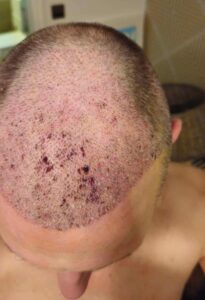
When To Contact Your Clinic
Because your clinic has invested in your outcome, they expect you to reach out during the critical first two weeks—not after problems compound.
Staying connected during this window matters. Most clinics maintain active aftercare channels—usually WhatsApp—specifically for this phase. Managing expectations means understanding what’s normal and what warrants immediate contact.
Reach out if you experience:
- Excessive bleeding or fluid that doesn’t stop after gentle pressure
- Signs of infection: fever, pus, or spreading redness beyond the transplant area
- Severe pain unresponsive to prescribed medication
- Unexpected swelling in face or neck areas
Your clinic has seen thousands of recoveries. They can distinguish between typical post-op discomfort and genuine complications within minutes. Early intervention prevents minor issues from becoming serious. Don’t wait—message them.
Month 1–3: Managing Shedding Without Panic or Wrong Advice
Between weeks 3 and 12, you’ll watch transplanted hairs fall out—and this terrifies most people despite being completely normal. The trick is knowing what shedding looks like when it’s working as intended versus when something’s actually wrong, because panic often leads to poor decisions that can genuinely damage your result.
Your clinic’s remote support matters here more than you might think, but you’ll need to know what questions to ask and when.
Why Shedding Happens First
The transplanted hair you’ve just paid for will fall out within weeks—and that’s exactly what should happen.
This isn’t failure. It’s biology. When grafts are extracted and relocated, they enter a shock phase. The hair shaft sheds, but the follicle remains dormant beneath your scalp, preparing to regrow.
Understanding hair regrowth patterns prevents panic:
- The hair shaft falls out days 7–21 post-procedure
- Follicles rest for 2–4 weeks in telogen phase
- New growth begins around month 4
- Full cosmetic results take 9–12 months
Most patients misinterpret shedding as a sign something went wrong. Clinics often don’t prepare you for this adequately—leaving you anxious during recovery.
Knowing this timeline adjusts patient reporting expectations. You’re not losing your investment. You’re watching the transplant work exactly as intended.
Distinguishing Normal From Alarming
Once you’re home and shedding kicks in, you’ll face a peculiar kind of anxiety: everything falling out looks wrong, but most of it isn’t.
Distinguishing normal from concerning means knowing what to expect. Transplanted hairs shed 1–3 months post-op—this is programmed biology, not failure. You’ll see them on your pillow, in the shower, on your clothes. It’s unsettling but necessary.
Recognizing red flags matters more. Contact your clinic if you notice: sudden clumps coming out (not individual strands), infection signs like pus or spreading redness, severe itching that won’t resolve, or numbness that worsens instead of improving.
Minor itching, scabbing, and gradual shedding are normal. Your clinic should’ve given you a contact point for questions. Use it. One message costs nothing. Panic costs peace of mind.
Remote Support Reality Check
Most hair transplant clinics don’t abandon you the moment you leave Turkey—they maintain contact through month 3, the period when shedding peaks and anxiety typically follows.
However, remote follow-up consistency varies wildly. Some clinics check in weekly; others go silent. The gap matters because you’re managing post-op self-care alone, interpreting physical changes without hands-on assessment.
What actually happens:
- You’ll receive WhatsApp messages or emails asking how you’re healing
- Response times differ—some clinics answer within hours; others take days
- Advice is often generic, not tailored to your specific scalp condition
- You’re responsible for knowing what’s normal shedding versus a red flag
The reality: remote support exists, but it’s a safety net, not a replacement for clinical judgment. Document everything with photos. Trust your instincts. If something feels wrong, consult a local dermatologist.
Finding a Local Doctor Who Actually Understands Hair Transplants
One of your biggest challenges after leaving Turkey will be finding someone at home who genuinely understands what you’ve had done.
Most GPs and dermatologists haven’t performed hair transplants themselves. They won’t know your specific technique, graft count, or extraction method. This gap matters during recovery when you need guidance on activity levels, medication interactions, or whether something looks normal.
Before you leave Turkey, ask your clinic to recommend a local medical liaison—a doctor they’ve worked with before who understands post-operative care. If that’s not possible, request written documentation of your procedure in detail.
Then contact local hair restoration surgeons or dermatologists with transplant experience. They’re more likely to understand your timeline and spot genuine issues versus normal healing.
Transparent communication expectations from the start make this easier.
What Happens If Something Goes Wrong After You’ve Left
Having a local doctor in your corner is one thing—but you’ll also need to know what happens if something actually does go wrong after you’ve left Turkey.
This is where clinics often go silent. You’re home, vulnerable, and facing unexpected expenses without clear guidance on who pays for what.
- Infection or delayed healing – Your Turkish clinic may provide antibiotics remotely, but if you need in-person treatment, costs fall on you
- Revision needs – Some clinics cover partial revisions; others don’t clarify terms until problems arise
- Long-term medication needs – Finasteride or minoxidil complications require ongoing specialist care you’ll fund locally
- Liability gaps – Distance makes accountability harder; written aftercare terms become your only protection
Ask your clinic explicitly: what’s covered after you leave, what’s your responsibility, and how disputes are resolved.
Scaling Back Restrictions: When and How to Resume Normal Life
When you get back home, the temptation to resume your normal life immediately is strong—but your scalp won’t be ready. Your post op scheduling should follow a structured timeline: weeks 1–2 remain restrictive, weeks 3–4 allow gradual movement, and weeks 5–8 enable most activities.
Daily activity guidelines matter here. Light walking’s fine from day one, but avoid gym work, heavy lifting, and contact sports until week 4. Swimming and saunas wait until week 3. Sweating irritates healing grafts, so plan accordingly.
I tracked my own recovery carefully—gentle walks around Istanbul helped mentally without compromising healing. When I returned home, I stuck to a quiet first two weeks, then slowly reintroduced normal routines.
The key? Don’t rush. Your grafts are still establishing.
Building a Realistic Timeline for Results You Can Actually See
Most clinics mention “full results in 12-18 months,” then leave you hanging. Here’s what managing patient expectations actually looks like:
- Months 1–3: Temporary shedding makes you question everything (it’s normal)
- Months 4–5: New hair begins emerging, but it’s thin and short
- Months 6–8: Visible density and thickening—this is when people notice
- Months 12+: Mature thickness and natural appearance solidify
I saw meaningful improvement by month 6, but didn’t reach my plateau until month 10. Your realistic timeline depends on graft count, recipient area, and hair characteristics. Don’t judge results before month 4. You’re not impatient—you’re just working with biology.
Frequently Asked Questions
Can I Fly Internationally in the First Week After Surgery, or Must I Stay in Turkey Longer?
You shouldn’t fly internationally in the first week—risk of swelling, infection, and blood pressure changes makes air travel unsafe. I’d recommend staying in Turkey 7–10 days minimum. Your surgeon will confirm when you’re cleared based on your healing progress.
How Do I Know if My Itching and Redness Are Normal Healing or Signs of Infection?
I’ll distinguish normal healing from infection by monitoring your symptoms closely. Mild itching and redness are typical during proper aftercare techniques. However, recognizing infection symptoms—fever, excessive swelling, or foul-smelling discharge—requires immediate contact with your clinic.
What Should I Tell My Local Doctor About My Transplant if They’ve Never Seen One Before?
Bring your transplant report and photos from surgery. Tell them your follow-up appointments schedule, any hair loss concerns you’re tracking, and the clinic’s aftercare protocol. This gives them the full picture they’ll need to support your recovery properly.
If My Transplant Fails in Month Three, Can the Original Clinic Still Honour Their Guarantee Remotely?
Most reputable clinics honor guarantees remotely through online aftercare options, though you’ll need documented evidence of failure. I’d verify your contract’s specific terms and long term follow up planning before proceeding—they vary considerably between clinics.
How Much Hair Shedding Is Normal, and When Should I Contact the Clinic Versus Waiting It Out?
Temporary shedding peaks around months 1–3—you’re watching transplanted hairs shed before regrowing. Contact your clinic only if you see inflammation, infection signs, or unusual scalp hygiene issues. Otherwise, wait it out; it’s normal.
Conclusion
You’re not alone in feeling abandoned after leaving Turkey. The responsibility for your recovery falls squarely on your shoulders—clinics won’t bridge that gap. You’ll need to find your own local specialist, stay vigilant for complications, and resist panic during shedding. Your success depends on your proactive approach and transparent communication with both your clinic and local doctors.
 Continue with Google