

I’ve encountered plenty of hair transplant patients who felt misled after traveling to Turkey. They’d booked with what seemed like reputable clinics, only to discover later that corners had been cut—sometimes catastrophically. If you’re considering a procedure abroad, you need to understand what separates legitimate clinics from “hair mills.” The differences aren’t always obvious, and they could determine whether you get natural results or regret your decision.
What Makes a Clinic a “Hair Mill”?
When you’re researching hair transplant clinics in Turkey, you’ll encounter the term “hair mill”—usually as a warning.
A hair mill prioritizes volume over quality. These clinics process dozens of patients daily, often with minimal medical oversight, relaxed surgical standards, and inadequate postoperative protocols. Staff rotate rapidly, continuity of care disappears, and complications get deprioritized.
What distinguishes a hair mill from a legitimate clinic? Look for red flags: pressure to book immediately, vague pricing structures, no clear surgical team information, and aftercare that ends when you leave Istanbul.
Conversely, quality clinics maintain transparent surgical standards, documented postoperative protocols, consistent medical teams, and structured remote follow-up. They operate within regulated hospital settings or certified facilities.
The difference isn’t always obvious from marketing alone—which is precisely why careful vetting matters before committing to any procedure.
Why Hair Mills Exist in Turkey’s Transplant Industry
Hair mills don’t exist by accident—they’re a direct result of how Turkey’s transplant market is structured, and understanding that structure helps you see why some clinics prioritize volume over outcomes.
The combination of high patient demand, relatively loose regulatory oversight, and intense price competition creates an environment where cutting corners becomes financially attractive. I’ll walk you through each of these factors and show you how they work together to sustain this model.
The Volume-Over-Quality Model
Because Turkey’s hair transplant industry operates in a high-volume, price-competitive market, clinics face constant pressure to maximize patient throughput—and that’s where the “hair mill” model takes root.
A profit-maximizing business model prioritizes speed and numbers over individual care:
- Scheduling multiple procedures daily without adequate surgeon time per patient
- Minimizing consultation depth to rush into surgery
- Delegating critical graft placement to junior or poorly trained staff
- Reducing post-op support to cut operational costs
- De-emphasizing advanced techniques in favor of faster, cheaper methods
The result? Lower prices attract volume, but outcomes suffer. Clinics operating this way rarely invest in surgeon training, quality control, or individualized hairline design. They’re betting you won’t notice until months later—when regrowth reveals the damage.
Regulatory Gaps and Low Oversight
Turkey’s Ministry of Health regulates hair transplant clinics, but the oversight doesn’t extend as far as you’d think. While hospitals operating under health ministry certification—like where I’d my procedure—face strict clinic oversight, many independent clinics operate with minimal scrutiny once they’re licensed.
The regulatory framework focuses on facility standards and basic qualifications, not on monitoring transplant outcomes, graft survival rates, or patient satisfaction. This gap creates space for hair mills to operate legally while prioritizing volume over quality.
Patient safety concerns arise because there’s limited post-operative tracking or accountability for poor results. A clinic can process hundreds of patients annually without documented outcome data being reviewed by regulators.
This regulatory inconsistency is precisely why choosing a hospital-based clinic with transparent credentials matters more than assuming all licensed facilities maintain equal standards.
Price Competition and Margin Pressure
Most hair transplant clinics in Turkey operate on thin margins, and that’s the real reason hair mills exist.
When competition among clinics intensifies, pressure to cut costs becomes unavoidable. Clinics face financial incentives to maximize patient volume and minimize procedural time—regardless of outcome quality.
Here’s how margin pressure drives the hair mill model:
- Lower staffing costs through junior technicians and minimal surgeon involvement
- Faster procedures that sacrifice graft placement precision
- Higher patient throughput per day to spread overhead
- Reduced consultation and aftercare investment
- Undercutting competitor pricing to win market share
The economics are brutal: a clinic charging €2,000 needs far more patients than one charging €5,000 to survive. That volume demand often means compromised standards. Understanding this financial reality helps you spot which clinics are genuinely prioritizing your outcome versus chasing numbers.
The Volume-Over-Quality Model Explained
When you’re comparing clinic prices in Turkey, you’ll notice something jarring: a €2,000 procedure at one clinic and a €6,000 procedure at another, both claiming to transplant 3,000 grafts.
The difference often comes down to volume strategy. Hair mills prioritize throughput—processing as many patients as possible daily—which means corners get cut. Surgeons rush between rooms. Extraction becomes mechanical rather than careful. Graft survival rates drop because quality standards and ethical protocols take a backseat to numbers.
A clinic charging more typically invests in slower, more meticulous extraction. They limit daily cases. They prioritize graft health over clinic revenue.
The low-price clinic isn’t necessarily a scam. It’s betting that you won’t notice poor results for 6–12 months. By then, refunds are off the table.
Red Flags in Pricing, Scheduling, and Consultation
When you’re researching clinics, you’ll notice pricing varies wildly—sometimes by thousands of dollars for the same procedure—and that gap often signals whether you’re talking to a mill or a legitimate practice. You’ll also spot mills by how quickly they push you toward booking: a rushed consultation, pressure to decide on your first contact, or a “limited-time” offer are classic signs they’re prioritizing volume over your actual needs.
I learned during my own research that the clinics worth considering actually took time to understand my specific situation before quoting a price.
Pricing That Seems Unrealistic
Because hair transplant pricing in Turkey ranges anywhere from €1,500 to €8,000+ for the same procedure, you’re right to be suspicious when a clinic’s quote sits at one extreme.
Hair mills often use pricing as bait:
- Rock-bottom quotes that mysteriously increase post-consultation
- All-inclusive claims without itemizing what’s actually covered
- Hidden costs for anesthesia, aftercare, or revision work
- Pressure tactics (“book today, this price expires”)
- Vague breakdowns that don’t explain graft count or technique differences
Transparent pricing should itemize grafts, technique (FUE vs. FUT), anesthesia, accommodation, and aftercare. Reasonable expectations mean understanding *why* clinics differ in cost—not assuming cheaper always means better value. If a quote seems impossibly low, ask for specifics before committing.
Rushed Consultation Timelines
How fast should a proper hair transplant consultation actually take?
A legitimate clinic takes time to assess your hairline, scalp health, donor density, and realistic expectations. This typically requires 30–60 minutes of genuine evaluation.
Hair mills rush you through in 15–20 minutes. They’ve already decided your price based on grafts before understanding your actual needs. Rushed scheduling means minimal questioning—perfect for unnecessary upsells like expensive serums, PRP add-ons, or inflated graft counts you don’t require.
When I consulted at Clinicana, the process was unhurried. Questions were answered thoroughly. My donor area was assessed carefully, not glanced at. That deliberation isn’t wasted time—it’s due diligence.
If a clinic pressures you to decide immediately or moves you toward payment without thorough discussion, that’s a red flag. Quality clinics know consultation takes time.
Pressure To Book Immediately
Legitimate clinics know you’ll need time to think—and they’re comfortable with that.
Hair mills use urgency tactics to bypass your critical judgment. They’ll tell you the price is “only available today,” slots are “filling fast,” or you need to decide “right now.” These are high pressure sales techniques designed to prevent you from comparing clinics or asking hard questions.
Red flags include:
- Quotes that expire within 24–48 hours
- Aggressive follow-ups via email or WhatsApp
- Claims that “this surgeon is only available next week”
- Discounts that vanish if you don’t book immediately
- Pressure disguised as “helping you secure your spot”
Reputable clinics give you space. They’ll answer follow-up questions, allow consultation time, and respect your timeline. If you feel rushed, that’s your signal to walk away.
Assembly Line Surgery: How Corners Get Cut
When a clinic prioritizes volume over individual patient care, the surgical process itself becomes mechanized—and that’s where quality deteriorates.
| Aspect | Quality Clinic | Hair Mill |
|---|---|---|
| Grafts per day | 1,500–2,500 | 3,000–5,000+ |
| Surgeon focus | Single patient start-to-finish | Multiple patients simultaneously |
| Extraction precision | Careful, angle-matched | Speed-optimized, higher transection |
| Implantation depth | Customized per zone | Standardized templates |
High-volume mills cut corners through rushed extractions, inconsistent angles, and template-based implantation rather than artistic placement. Surgeons rotate between patients instead of seeing yours through completion.
This is why avoiding time pressure and responsible decision making matter. Ask clinics: Who extracts? Who implants? Do they handle one patient at a time? Mills won’t answer directly—they’ll redirect to pricing or testimonials.
Patient Care After Surgery: Where Mills Fail
Because a hair mill’s entire business model depends on maximizing patient throughput, aftercare becomes a casualty of cost-cutting.
You won’t experience respectful aftercare or a considerate bedside manner. Instead, expect:
- Minimal follow-up contact after you leave the clinic
- Generic, one-size-fits-all aftercare instructions with no personalization
- Slow or dismissive responses to complications or concerns
- No structured checkups or remote monitoring
- Staff turnover that means you’re explaining your case repeatedly
In contrast, legitimate clinics invest in aftercare because it directly impacts results and reputation. I received ongoing WhatsApp support, scheduled checkups, and responsive guidance throughout my recovery—not because they’re exceptional, but because respectful aftercare should be standard.
Mills skip this entirely. If you’re treated as a transaction rather than a patient, that’s a red flag.
How to Verify a Clinic’s Actual Standards
When I was researching clinics before my procedure, I realized that a clinic’s website and marketing tell you almost nothing about whether it’s actually operating to medical standards.
The real verification comes from checking hospital accreditation, understanding who’s actually performing your surgery, and confirming those credentials are independently verifiable—not just claimed.
Let me walk you through what to look for.
Hospital Accreditation and Registration
Hospital accreditation and registration are two of the easiest ways to separate legitimate clinics from unlicensed operators—yet they’re often overlooked in research.
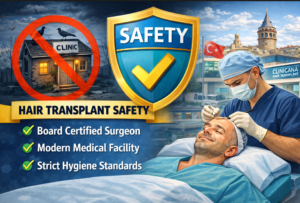
When I chose my clinic in Istanbul, I verified it operated inside Acıbadem Taksim Hospital, a certified private facility regulated by Turkey’s Ministry of Health. This single fact eliminated enormous risk.
Here’s what legitimate accreditation requirements and quality standards look like:
- JCI (Joint Commission International) certification for hospitals
- Turkish Ministry of Health registration and inspection records
- Operating within a licensed hospital, not a standalone office
- Documented surgical team credentials and ongoing training
- Published success rates and complication data
Ask clinics directly: Where are you licensed? Who inspects you? Can they prove it? Vague answers are red flags. Real clinics have paper trails.
Medical Team Credentials and Oversight
Verifying a hospital’s registration gets you halfway there—but the people holding the scalpel matter just as much.
A legitimate clinic maintains transparent medical staff expertise through documented qualifications, board certifications, and verifiable surgical experience. Ask directly: What’re the surgeon’s credentials? How many procedures have they completed? Where did they train?
Robust oversight protocols distinguish real operations from mills. This means internal quality audits, infection control standards, and peer review processes—not just marketing claims. Hospital-based clinics typically have stricter accountability because they’re answerable to the institution’s regulatory body, not just themselves.
When I visited Clinicana, I could verify the surgical team’s credentials through Acıbadem’s official channels. That transparency wasn’t coincidental—it’s structural. If a clinic won’t provide verifiable information about who’s actually performing your surgery, that’s a red flag worth taking seriously.
The Difference Between High Volume and a Hair Mill
Why do some Turkish clinics charge half the price of others while claiming identical results? The answer lies in understanding the difference between legitimate high volume and a hair mill operating on quality versus quantity.
High-volume clinics maintain standards through:
- Streamlined processes without cutting corners on medical care
- Multiple experienced surgeons working simultaneously
- Efficient scheduling that reduces overhead
- Consistent training and quality control
- Transparent pricing reflecting actual costs
Hair mills prioritize profit through cost cutting measures:
- Rushing procedures to maximize daily cases
- Using less experienced extractors
- Minimal post-op support
- Overselling graft viability
- Hidden fees after initial quote
The distinction isn’t case volume—it’s whether efficiency serves patient outcomes or replaces them. Real clinics scale responsibly. Mills scale recklessly.
Questions to Ask Before Booking (That Mills Won’t Answer Honestly)
Once you’ve narrowed down your clinic options, the questions you ask—and how they’re answered—will tell you almost everything you need to know. Ask for a detailed treatment plan that outlines graft placement, density goals, and realistic timelines. Request customized recovery guidance specific to your work and lifestyle.
Mills dodge specifics. They’ll offer vague timelines, generic aftercare, and pressure you to decide quickly. Legitimate clinics provide thorough written consultations, explain their methods openly, and answer technical questions without defensiveness.
Ask who’ll perform your procedure, how many grafts they’ve placed that month, and whether your surgeon will be present throughout. Ask for before-and-afters matching your hair type and loss pattern.
A mill won’t. That silence is your answer.
Building Your Own Verification Checklist
The gap between what a clinic claims and what it actually does isn’t always obvious—especially when you’re researching from another country and relying on websites, reviews, and phone calls. Building your own verification checklist helps you cut through marketing and identify genuine trust signals.
Look for:
- Hospital affiliation and regulatory registration with Turkey’s Ministry of Health
- Transparent pricing with itemized breakdowns (not vague “packages”)
- Clear treatment timeline documentation from consultation through aftercare
- Verifiable before-and-afters with patient consent and realistic timescales
- Direct answers to your specific questions—mills deflect or oversell
Cross-reference clinic claims against independent review platforms. Ask for post-op contact details from past patients. Request detailed aftercare protocols in writing. A clinic willing to be specific and accountable isn’t hiding something.
Frequently Asked Questions
If a Clinic Performs 50+ Transplants Weekly, Does That Automatically Make It a Hair Mill?
No. High volume alone doesn’t make a hair mill. What matters is whether experienced surgeons maintain quality standards, individual patient care, and realistic results—not just throughput. Volume combined with shortcuts is what you should watch for.
Can Hair Mill Clinics Still Produce Acceptable Results, Even if Their Process Is Rushed?
Yes, they can—but it’s inconsistent. High staff competence and robust quality control measures can mitigate rushed processes. You’re not guaranteed acceptable results, though. I’d rather trust a slower, methodical clinic where corners aren’t cut.
How Do I Know if My Surgeon Actually Performed My Procedure Versus an Assistant?
You’ll rarely know with certainty unless you ask directly before surgery. I recommend requesting surgical oversight verification in writing and evaluating postoperative care quality—genuine surgeons provide detailed follow-up, not assistants handing you off immediately after.
Are Cheaper Hair Mill Prices Worth the Risk of Poor Long-Term Outcomes and Complications?
No. I’d argue that post surgery recovery risks and long term hair quality concerns make cheap hair mill prices a false economy. You’re trading short-term savings for potential years of managing poor outcomes, infections, or revision costs.
What Legal Recourse Exists if a Turkish Hair Mill Clinic Damages My Scalp Permanently?
Your legal recourse in Turkey’s fragmented market is limited. You’ll find minimal regulatory oversight accountability for hair mills operating outside hospital systems. Damage mitigation options typically mean pursuing civil claims—costly, slow, and difficult without written consent forms or medical documentation.
Conclusion
You can protect yourself by demanding transparency at every step. Ask about your surgical team, request before-and-afters from similar cases, and don’t let urgency push you into decisions. A legitimate clinic won’t rush you or dodge your questions. Your hair restoration deserves the same care you’d expect from any serious medical procedure—not a factory production line.
 Continue with Google