

Every year, tens of thousands of people travel to Turkey for affordable hair transplant surgery. Yet many prospective patients don’t realize a critical question: who actually performs the hair transplant surgery at their chosen clinic? In some clinics, a qualified surgeon handles the key steps. In others, a team of technicians performs most of the procedure with minimal input from a doctor. This article dives deep into technician-led vs doctor-led hair transplants – covering legal and ethical responsibilities, the steps that truly impact your results, why hairline design is the make-or-break factor for natural looking hair, and how you can verify real surgeon involvement before you ever book a flight.
As someone who had a successful hair transplant in Istanbul (at Clinicana) and documented the journey, I want to share the insights I learned. The goal is to give you knowledge and confidence to pursue a safe, high-quality hair transplant experience in Turkey. Let’s explore what really happens behind the scenes and how to ensure your procedure is in the right hands.
Who Performs Hair Transplant Surgery in Turkey? Technician vs Surgeon Roles
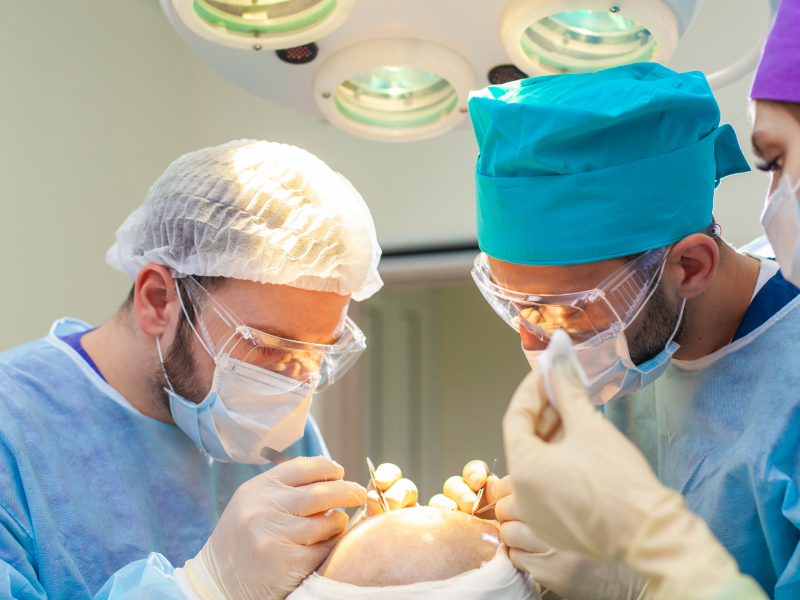
In a properly run hair transplant clinic, a licensed surgeon (MD) should perform or directly supervise all surgical aspects of the procedure. Turkish law actually requires that only a doctor make any surgical incisions (such as the graft extractions and the recipient site incisions) – technicians are not legally allowed to perform these on their own (wimpoleclinic.com). In other words, if you’re asking “is a doctor required for hair transplant surgery?”, legally and for your safety the answer is yes. Technicians and nurses can assist the doctor, for example by preparing grafts or even placing grafts into sites the surgeon created, but the critical cutting steps must be done by a physician. The International Society of Hair Restoration Surgery (ISHRS) echoes this globally: key steps like the pre-op consultation, surgery planning, donor harvesting, hairline design, and creating recipient sites should only be done by a properly trained, licensed physician (ishrs.org).
Despite these rules, a number of high-volume transplant centers (often called “hair mills”) skirt the law and ethics by letting unqualified staff do most of the work. In these technician-led operations, you might only see a doctor briefly (if at all). Once you’re under local anesthesia, the “doctor” might disappear and leave the rest to technicians. Some clinics in Istanbul reportedly perform 20+ surgeries a day this way – the doctor’s face is just used for marketing, while young technicians handle the extractions and incisions in an assembly-line fashion (wmedtour.com). Not only is this unethical, it’s also illegal and risky. (For perspective, Istanbul has over 1,000 hair transplant clinics but only around 20–30 certified hair surgeons, meaning many surgeries are happening without a qualified surgeon truly at the helm (tampabayhairrestoration.com).)
Legal responsibility: In Turkey, the clinic’s medical director (a licensed doctor) is legally accountable for your surgery, even if technicians do the work. If an unlicensed technician makes incisions or harvests grafts, that violates Turkish medical law and could be grounds for malpractice claims. It also means the supposed “surgeon” is not fulfilling their duty of care.
Ethical responsibility: Ethically, a surgeon should never delegate surgical tasks to someone not properly trained or certified. The surgeon’s expertise – in anatomy, surgical technique, and aesthetic planning – is what ensures patient safety and a successful outcome. When clinics use technicians to cut costs and rush through more patients, they sacrifice quality and safety. There’s no genuine medical accountability if something goes wrong. In contrast, a doctor-led transplant means the surgeon personally designs your surgical plan and performs the crucial parts of the procedure (with a consistent team assisting). The doctor will be present to manage any complications and ultimately is the one responsible for your results.
To understand why it’s so important to have a qualified surgeon involved, let’s look at the hair transplant process and which stages truly influence the success of your transplant.
Key Steps That Affect Your Hair Transplant Outcome
A hair transplant is a multi-step procedure. But not every step is equal in terms of impact on your final result. Below are the stages of a typical hair transplant and why each matters – with an emphasis on which roles should be handled by the surgeon vs. technicians:
- Initial Consultation & Planning: This is where the patient’s hair loss is evaluated, a diagnosis is confirmed, and a surgical plan is made (including how many grafts, which areas to cover, and an appropriate hairline design). Impact: Critical. A misdiagnosis or bad plan can lead to an unnatural transplant or future hair loss that wasn’t accounted for. Surgeon’s role: A qualified doctor should conduct the consultation and design the plan, because they can properly assess your hair loss pattern, donor supply, and medical contraindications. (A salesperson or tech cannot properly do this on their own.)
- Hairline Design: The planned new hairline is drawn on your scalp, creating the blueprint for your restored look. Impact: Extremely critical. The hairline defines the aesthetics of the result – it’s what frames your face. A poorly designed hairline (too low, too straight, too harsh) will look fake no matter how good the rest of the transplant is. Surgeon’s role: The surgeon should design the hairline personally, using their artistic eye and experience. This step requires understanding facial proportions and future aging. Technicians might assist or give input, but the final hairline plan must be the doctor’s decision.
- Donor Hair Harvesting: In an FUE transplant, this means punching out hundreds or thousands of grafts one by one from the back of your head. (In a FUT “strip” transplant, it means surgically excising a strip of scalp to get grafts.) Impact: Very high. Harvesting determines the quality of grafts (transected/damaged grafts won’t regrow), the scarring in the donor area, and how much donor hair will remain for future procedures. Surgeon’s role: Extracting grafts involves making tiny incisions or excisions – it’s a surgical skill. A certified surgeon or physician should perform the FUE harvesting or at least directly supervise each extraction. If technicians over-harvest or cut grafts badly, you can end up with permanent scalp damage and poor growth. (Sadly, over-harvesting by inexperienced techs is a common issue in hair mills.)
- Graft Preparation: Once taken out, the hair follicle grafts are cleaned, sorted, and counted under microscopes. Impact: Moderate. Proper handling here preserves graft viability. Technician’s role: Well-trained surgical assistants (techs or nurses) usually handle graft prep. They trim excess tissue and keep grafts in a hydrated solution. The surgeon oversees quality, but this is a part that skilled tech staff can do safely while the surgeon moves on to create recipient sites.
- Recipient Site Creation (Incisions): The surgeon makes tiny incisions (or needle holes/slits) in the bald recipient area where each graft will be placed. This step sets the angle, direction, and density for your new hair. Impact: Extremely high. The pattern of incisions is what creates the visual design of the transplant. If the angles are wrong or the pattern is unnatural, the result will look strange (think “doll hair” effect). Surgeon’s role: This is a core artistic and technical step that must be done by the surgeon. It’s essentially microsurgery – deciding exactly where each graft goes and at what angle to mimic natural hair growth. Technicians should not be making recipient sites on their own, both for legal reasons and because it requires the surgeon’s aesthetic judgment.
- Graft Placement (Implantation): The final major step is placing each follicular unit graft into the pre-made incisions or, in some techniques, loading them into an implanter pen. Impact: High. Careful placement ensures each delicate graft isn’t crushed, and that hair grows in the correct direction. It also affects how refined the hairline looks (often single-hair grafts are placed in front, denser ones behind). Surgeon’s role: The surgeon may do some critical placements (especially for the hairline zone), but often technicians under supervision will do a large portion of the implantation. Implanting thousands of grafts is labor-intensive, and well-trained techs can implant grafts efficiently as long as the surgical plan (incision sites) was done by the doctor. It’s acceptable for techs to place grafts, as this doesn’t involve making new incisions – though the doctor should be nearby monitoring.
- Post-Op Care & Follow-Up: After the surgery, proper wound care instructions are given and follow-ups are scheduled to monitor growth and healing. Impact: Moderate. Good post-op guidance helps prevent infections and ensures the patient does what’s needed for grafts to survive (like proper washing technique and avoiding trauma to grafts). Surgeon’s role: The doctor should check the immediate results and be involved in post-operative instructions. Technicians or nurses often assist in cleaning the scalp and educating the patient on aftercare, as directed by the doctor, but a doctor should be available to address any medical concerns during recovery.
As we can see, the steps that truly influence the outcome – the surgical planning, hairline design, harvesting, and making recipient incisions – all depend on the expertise of a surgeon. It’s not a coincidence that those are exactly the tasks professional guidelines say must be done by physicians. If any of these critical steps are done poorly (or by the wrong person), the patient’s results will suffer. No amount of technician effort in the less critical steps can compensate for mistakes in the core surgical stages.
To summarize the typical division of roles in a reputable clinic versus a technician-driven clinic, consider the following breakdown:
| Procedure Step | Surgeon’s Role (Doctor-Led Clinic) | Technician’s Role (If Delegated) |
|---|---|---|
| Pre-Op Diagnosis & Planning | Conduct medical evaluation; create surgical plan and hairline design tailored to patient. (Should be doctor-led for proper diagnosis and artistry.) | May assist by taking photos or notes, but should not independently plan treatment. |
| Hairline Design | Draw and refine the hairline on patient’s scalp, using artistic judgment for a natural look. (Critical task – surgeon should do this.) | Can suggest or mark basic template, but lacks the expertise for final design decisions. |
| Anesthesia & Prep | Administer local anesthesia (often the doctor or an anesthesiologist does injections); ensure patient comfort and safety. | Assist by prepping patient, sterilizing donor area, and monitoring patient under supervision. |
| Donor Harvesting (FUE/FUT) | Perform graft extractions (each FUE punch or the surgical strip removal) with precision to maximize viable grafts and minimize scarring. | Can help by operating equipment or counting grafts under direct supervision. Unlicensed techs should not excise grafts on their own. |
| Graft Sorting & Handling | Oversee quality control of grafts (ensure proper hydration and count). | Handle grafts under microscope: trimming, sorting, counting. (This is commonly technician-led once grafts are out of the scalp.) |
| Recipient Site Creation | Create all recipient sites (incisions) in the balding area, controlling hair direction, angle, and density. (Must be done by surgeon for natural results and to meet legal standards.) | Not qualified to make incisions. (Any unsupervised technician involvement here would be illegal in Turkey and risky elsewhere.) |
| Graft Placement (Implantation) | May place crucial grafts (especially along the hairline) and supervise overall placement pattern. | Place grafts into the sites following the surgeon’s plan. (Experienced techs commonly implant a large portion of grafts while adhering to the design and directions set by the surgeon.) |
| Post-op Dressing & Instructions | Check surgical work, manage any immediate issues, and give medical advice on aftercare and medications. | Apply bandages, clean donor/recipient areas, and explain aftercare steps, reinforcing the doctor’s instructions. |
In a top-tier clinic, the surgeon is hands-on for every surgical step that affects outcome, and technicians function as an extension of the surgeon to increase efficiency (never as a replacement for the surgeon’s skill). In a “technician-led” clinic, many of the tasks in the right column are done without adequate surgeon oversight – which can lead to the many horror stories of botched results or complications.
Hairline Design: The Most Critical Factor for Natural Results
If there is one aspect of a hair transplant that can make or break the appearance, it is the hairline design. The hairline is literally the front and center of your results – it’s what people see first when they look at you. An impeccably designed hairline frames your face in a way that looks youthful yet age-appropriate, dense yet natural, and suits your unique head shape. A bad hairline, on the other hand, will immediately signal that something is “off.”
Think of hairline design as both science and art. The science involves understanding how hair naturally grows irregularly along the forehead, with softer density at the very front and certain random zig-zag patterns (no one has a perfectly straight line of hair). The art involves tailoring the placement to your facial proportions, hair characteristics, and even future aging. A skilled surgeon will take into account things like your forehead size, temples, facial shape, and your anticipated hair loss progression when drawing your new hairline.
In my own surgery, I realized just how important this step was. My surgeon spent a long time meticulously drawing and adjusting my proposed hairline before we ever touched a razor or needle. He showed me how it fit my face and explained why he wasn’t lowering it too much (to keep it natural as I age). That level of detailed planning gave me confidence – and indeed, the natural look of my final result owes a lot to that careful hairline design upfront.
It cannot be overstated: a transplant with an unnatural hairline will never look right, even if the grafts grow well. In contrast, a beautifully designed hairline can make a moderately dense transplant appear completely natural. As renowned Turkish hair surgeon Dr. Serkan Aygın puts it, “The true success and naturality of hair transplant results depend on hairline design” (drserkanaygin.com). It determines whether the surgery “goes unnoticed, or looks obvious.” That’s why the surgeon’s artistic sense and experience are so vital here – it’s not just technical skill with the scalpel, but an eye for harmony and detail.
Unfortunately, hairline design is one area that black-market clinics often botch. An unqualified person might draw a too-low hairline to please the patient in the short term, not realizing it will look strange as hair loss continues. Or they might create a straight “doll-like” hairline that lacks the irregularities of nature. I’ve heard of cases where a template or rubber stamp was literally used to mark the hairline – a one-size-fits-all outline with no personalization! This is the opposite of how a reputable surgeon approaches it. In a proper doctor-led transplant, the hairline will be custom-tailored. The surgeon may even redesign it on the fly during surgery if needed, adjusting for the actual graft count or scalp conditions.
If you want a hair transplant result that you can wear confidently, pay close attention to who plans your hairline. Look at before-and-after photos specifically focusing on hairline naturalness. Ask the clinic who will draw the hairline – if it’s not the lead surgeon, that’s a red flag. A natural hairline is equal parts artistry and technical implantation, and it’s the hardest thing to get right. But when it’s done right, even other hair transplant surgeons will have a hard time telling you’ve had work done.
How to Verify a Surgeon-Led Procedure: A Patient Checklist
By now it’s clear that having a real surgeon perform your hair transplant (as opposed to an unseen technician team) is crucial for both safety and results. But as a patient coming from abroad, how can you verify that your chosen clinic truly uses qualified surgeons throughout the procedure? Here’s a practical checklist to help you vet a clinic and ensure you’ll get the surgeon involvement you expect:
- Research the Clinic’s Credentials: Verify that the clinic is licensed by the Turkish Ministry of Health to perform hair transplants. Legitimate clinics will have a Hair Transplant Unit Operating License and should be willing to share proof. Also check if the lead surgeon is a member of respected organizations like the ISHRS or the Turkish Society of Plastic Surgery – membership often implies they uphold certain standards (for example, ISHRS members must personally perform all incisions).
- Ask Who Performs Which Steps: Before booking, directly ask the clinic: “Who will design my hairline and make the incisions?” and “Who will be extracting the grafts?” A trustworthy, surgeon-led clinic will answer that the doctor does these steps (often with assistance for graft placement). If they say “our technicians do the implantation” or something, that’s fine – but if they say technicians do the incisions or donor harvesting while the doctor “oversees,” be cautious. Get clarity on how involved the doctor is during each phase. Don’t settle for vague answers. Ensuring you know exactly who will handle the critical parts of surgery is your right as a patient.
- Insist on Speaking with the Surgeon: Many ethical clinics offer a pre-surgery consultation (via video call or in person) directly with the surgeon who will treat you. This is your chance to evaluate their philosophy and ensure you’re comfortable. If a clinic only lets you speak to a sales representative or “consultant” and you never meet the actual doctor during planning, consider that a warning sign. You want a surgeon who is accessible and willing to discuss your case – not a distant figurehead.
- Check Reviews and Patient Experiences: Look for independent reviews or ask past patients about their experience. Specifically, see if people mention the surgeon’s presence. Were they with the doctor for a good amount of time? Did the doctor draw the hairline and conduct parts of the surgery, or did the patient feel it was mostly technicians? Real patient stories (on forums, YouTube, etc.) can reveal if a clinic practices what it preaches. (On my blog, I’ve shared videos of my own surgery day at Clinicana – you can see the surgeon actively involved in my procedure, which is how it should be.)
- Watch Out for Red Flags: Be wary of certain red flags that often indicate a technician-driven clinic. For example, an “all-inclusive” package that seems too cheap, or promises of an “unlimited graft” session, are tactics often used by hair mills. These places might be trying to attract volume business and could be cutting corners on staff qualifications. Another red flag is if a clinic schedules many surgeries in the same day. If one surgeon is supposedly overseeing 5 or 6 patients at once, you can bet that much of the work is being done by techs without proper supervision. Choose a clinic that limits daily surgeries to a volume a single surgeon (and their team) can realistically handle.
- Confirm On Arrival (Day of Surgery): Even after all your research, double-check things when you arrive at the clinic. When you meet the team, confirm who’s who. Don’t be shy about asking, “Are you Dr. ___? Will you be doing the surgery?” If a different person shows up to do the hairline drawing or injections and it’s not the surgeon you were introduced to, speak up or ask for the doctor. Ethical clinics won’t be offended – they know educated patients will ask these questions. Also, look for indications of a professional medical environment: the surgeon’s medical degrees on the wall, the number of staff in the room (a surgeon plus a few assistants, not 10 unsupervised people milling about), etc. If something feels off or you suddenly discover the doctor is absent, you are within your rights to postpone or even cancel the surgery.
By following the above steps, you can significantly reduce the risk of ending up in the wrong hands. A reputable Turkish hair transplant clinic will be transparent about the surgeon’s involvement. They understand that educated patients want to ensure they’re getting what they paid for – a safe surgery performed by a qualified physician, with skilled assistants in supportive roles.
Conclusion: Putting Safety, Artistry, and Accountability First
A hair transplant is a life-changing procedure – you’re investing in your appearance and confidence for years to come. The allure of low prices in Turkey should never come at the expense of proper medical care. Safety, artistry, and surgeon accountability are the pillars of a successful hair transplant, whether in Turkey or anywhere else.
From my personal experience, I can attest that doing thorough research and choosing a surgeon-led clinic made all the difference. My surgery at Clinicana wasn’t the cheapest option on the market, but it was performed with impeccable attention. The hairline was designed by an experienced surgeon, then the procedure was done with highly expeirenced technicians under close observation by the surgeon. today I’m grateful every time I look in the mirror and see a natural hairline. That outcome is priceless.
If you’re considering a hair transplant in Turkey, here are some final actionable tips to keep in mind:
- Prioritize the Surgeon’s Skill: Look beyond flashy marketing. Investigate the surgeon’s background, their results, and their involvement. A famous clinic name means little if you don’t know who the surgeon is. Aim for a doctor with proven experience in hair restoration and an artistic portfolio of hairlines.
- Don’t Bargain Shop with Your Scalp: It’s fine to seek affordability, but if one clinic is dramatically cheaper than the rest, ask yourself how they’re cutting costs. It might be by using cheaper, unqualified labor. Remember that repairing a bad transplant (or living with one) will cost you far more in the long run.
- Insist on Transparency: Make it clear you expect the surgeon to be integrally involved. An honest clinic will reassure you and even welcome you to observe their procedure routine if possible. They’ll have nothing to hide. In contrast, if you sense evasion or high-pressure sales tactics when you ask about the medical details, walk away.
- Value Artistic Excellence: A hair transplant is not just surgery – it’s art. Choose a team that cares about designing a hairline that suits you and implanting grafts carefully for natural density and growth pattern. This is often only possible when the lead doctor is passionate about the craft, not when a clinic is treating you like another number for the day.
- Remember You Are In Control: Even in a foreign country, you have the right to safe, quality care. Don’t surrender that control. If something doesn’t feel right, you can refuse treatment or ask for changes. Reputable clinics will respect your vigilance; disreputable ones will get defensive. Trust your instincts.
By focusing on clinics that put the surgeon’s expertise front and center, you greatly increase your chances of a successful outcome – a healthy procedure, a natural-looking result, and a positive experience. Turkey offers some of the world’s best hair transplant surgeons and clinics; it’s simply a matter of identifying them and not falling for the traps of the technician-run mills.
In the end, a hair transplant is as much an art as it is a medical procedure. Choosing a doctor-led approach means choosing artistry, precision, and accountability. That decision will show in your results. Equip yourself with knowledge, ask the tough questions, and you’ll be on your way to a safe and transformative hair restoration journey in Turkey.
Sources:
https://wimpoleclinic.com/blog/turkish-hair-transplant-clinic-red-flags/
https://ishrs.org/patients/consumer-advocacy/
https://wmedtour.com/survival-guide-spot-unlicensed-hair-technicians-turkey/
https://tampabayhairrestoration.com/black-market-hair-transplants/
https://www.drserkanaygin.com/blog/hairline-design/
 Continue with Google